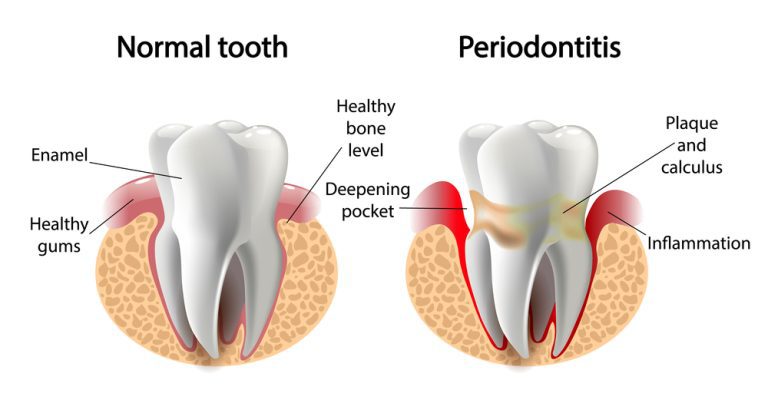
Plaque builds up on your teeth and turns into tartar, the hard build-up that forms around the gum line. Once tartar forms, only that dreaded metal scraper works effectively to chisel it off. Instead, you can prevent plaque and tartar buildup from forming in the first place and reduce how often you need that scraping.
Is Food to Blame?
Conventional advice tells us to brush and floss after every meal to get rid of food remnants. Neglect this routine and we are told that the buildup is our fault. But that doesn’t explain the paradox: some people brush and floss religiously yet still battle plaque, while others barely do either and consistently get a clean bill of health at every checkup.

The fact is that the bits of food stuck between your teeth won’t score you any dates, but they are not causing your dental woes. The problem is the bacterial environment in your mouth.
How Plaque and Tartar Buildup Form
In oral health, good bacteria are known as the skin of your teeth and form a protective film over your teeth called biofilm. This sticky film is made of healthy bacteria wrapped in protein.
Streptococcus mutans, on the other hand — the bad bacteria — are what cause plaque formation. These bacteria feed off of sugars in your mouth and food stuck between your teeth to form plaque. Left alone over time, this plaque hardens and transforms into tartar.
Food can be a breeding ground for harmful bacteria. Acidic foods aid in the process of plaque and tartar formation but they are not the direct cause. If the bad bacteria in your mouth didn’t exist in the first place, then the chain of plaque formation is broken.
Plaque is an active bacterial infection that feeds on sugars in the mouth and stubbornly sticks to the surface of the tooth. As it continues to feed on sugar, the plaque thickens.
When plaque on the innermost layers can no longer access oxygen, it learns to survive without it. This is bad news for your teeth because to survive, this plaque produces lactic acid via fermentation and causes erosion in the tooth enamel, the protective covering of the tooth. Once softened, bacteria take advantage of this opening to spread to other areas of the tooth causing more erosion and cavities.
What is Plaque?
Here’s a 3 minute explanation of plaque.
Importance of Saliva pH
What dentists rarely talk about and something critical to good oral health is the pH level or acidity of your saliva. The acidity of your saliva fluctuates with every sip of a drink, even water. Spicy foods, sugary foods and soda all push your saliva pH toward acidity and weaken your teeth and gums.
So much of the advice we get regarding diet and nutrition contributes to poor oral hygiene. For example, regular drinking and snacking wreak havoc on our saliva pH.
Maintaining a healthy salivary pH — not just brushing and flossing — is what makes the difference between plaque and tartar formation and a clean, plaque-free and tartar-free mouth.
This is not to say that brushing and flossing have no role in oral health. But if you ignore the healthy balance of your saliva, no amount of brushing and flossing will permanently stop plaque formation and you will rely on professional cleaning forever.
How to Support Healthy Saliva Production and Reduce Plaque
A healthy diet and managing saliva pH after eating and drinking are the two main ways to maintain healthy saliva production and good dental health. A healthy diet includes fruits and vegetables, foods high in fiber and vitamin C, fermented foods and any foods that promote a healthy gut.
To manage saliva acidity between meals, you need something to raise the pH. Some foods lower the acidity of your mouth. For example, watermelon, asparagus, mushrooms, mango, apples, and garlic. Lemons, on the other hand, alkalize or reduce the acidity of the body but make your mouth more acidic.
Another way to lower the acidity of your saliva between meals is xylitol. The easiest way to consume xylitol between meals is by xylitol gum or mints.
The main takeaways are:
- Manage the acidity of your saliva with a diet rich in fibre, fruits, and vegetables to support gut health and saliva quality. Keep in mind, men and women are different when it comes to salivary pH
- Limit frequent snacking and sipping which likely makes your saliva’s pH acidic
- Take xylitol mints after snacks and sips
- Keep brushing and flossing regularly
If you have severe plaque build-up and tartar formation, you probably need professional cleaning, especially for tartar removal in stubborn areas. But the best way to stop plaque formation for good is to remember that good dental care begins at home with your daily habits.